River Būka – Lake Baluošas (up to Trainiškis village)
You’ll visit 7 islands of Lake Baluošas and the famous Šuminai village!
10.00 – 20.00 €
- ~4 hours
- ~10 km
Inquire and book canoes
The "River Būka – Baluošas" stretch is ~10 km. You'll paddle for ~4 hours.
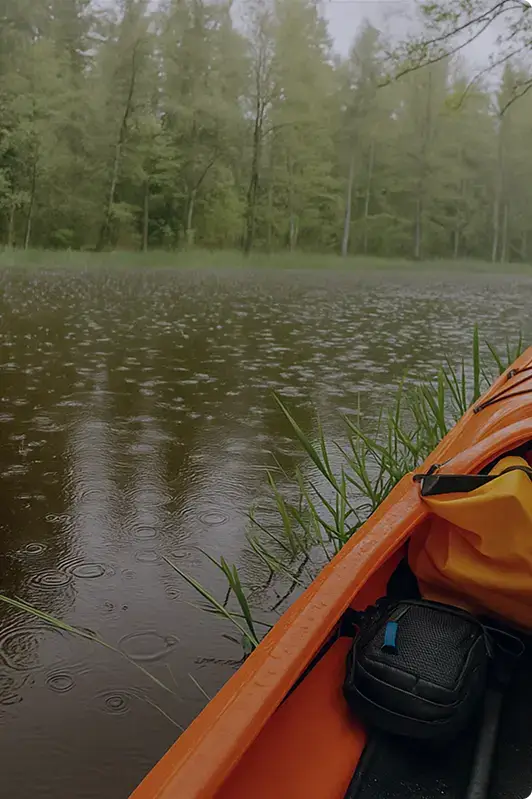
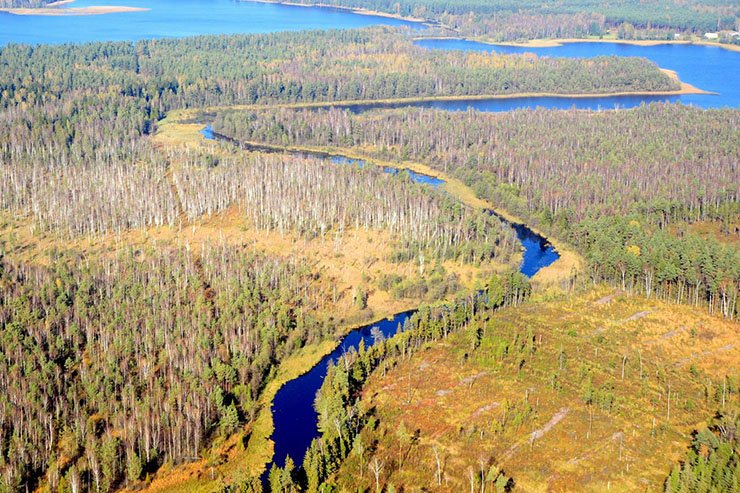
Your journey on the Būka River starts from the Lašmenas Strait, known for its rich marsh flora. This strait is the area between Utenykštis and the Būka River. During the trip, you can rest in ethnographic areas and campsites along the river. The banks of Būka are lined with dense forests. On the left side of your paddling direction is the Ažvinčiai forest, and on the right is the Vyžiai forest (Fig. 1). So, while paddling this river, you’ll not only get acquainted with the rich river flora and fauna but also confirm that Būka is one of the cleanest rivers in Lithuania!
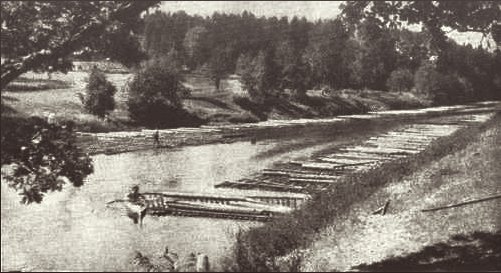
In the past, the Būka River was used for log rafting (Fig. 2). You know that the river’s water level varies in certain areas, so the water level was artificially raised to ensure optimal log transportation. You’ll find remnants of wooden dams during your trip!
About a kilometer from the start of your journey (from the Būka’s source at Utenykštis), you’ll reach the Ineiga rest area. Here you can take a break after the start. But don’t linger too long, as the journey has just begun!
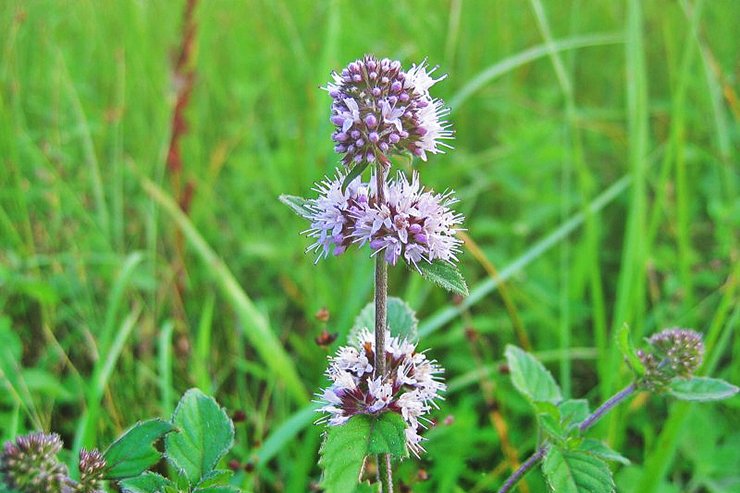
You might encounter families of Water Lilies while paddling. Water Lilies are listed in the Red Book, so act responsibly – do not pick or harm them! If you like to pick plants as souvenirs, look for Water Mint hidden among the reeds on the riverbanks (Fig. 3), whose flowers are not only beautiful – at the end of the trip, you can brew delicious mint tea for yourself and your travel companions!
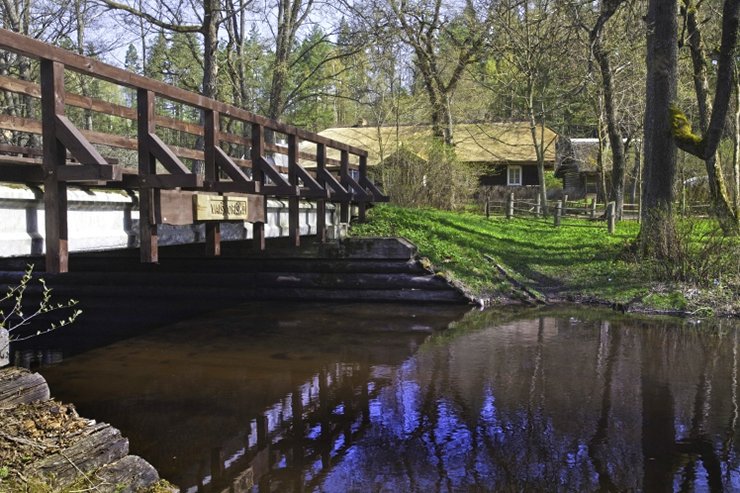
Soon you’ll notice the village of Vaišnoriškės (Fig. 4), recognizable by the 19th – 20th-century style residential buildings, with wooden piers and bridges extending from their yards into the river. Passing the piers, you’ll cross a bridge needed to continue the road between Tauragnai and Braslavas. Next to that bridge on the left side of your paddling direction, you’ll notice an ethnographic area: once there stood an inn (Fig. 5), mentioned since 1765. The first homestead in this area was established in 1830. Later, four more were built.
After passing the mentioned Vaišnoriškės and the road bridge, the Būka narrows and becomes winding. This section of the Būka River is characterized by some deep spots and a more intense current. And, of course, how could there not be fallen trees across the river? You’ll find more than one, so you may need to carry some canoes over logs or on land along the riverbanks. Remember, a wet tree is slippery, the riverbed is not always even, and the current can disrupt balance. Be coordinated, unless you want to take a dip in the swift waters of Būka. J
Note that the river sometimes has bays that look like branches of the river. You’ll recognize the true riverbed by paying attention to the current – the free flow of water and the movement of plants.
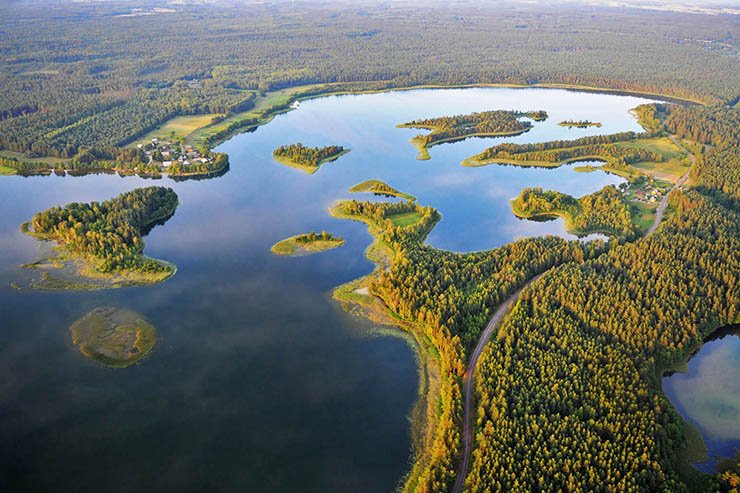
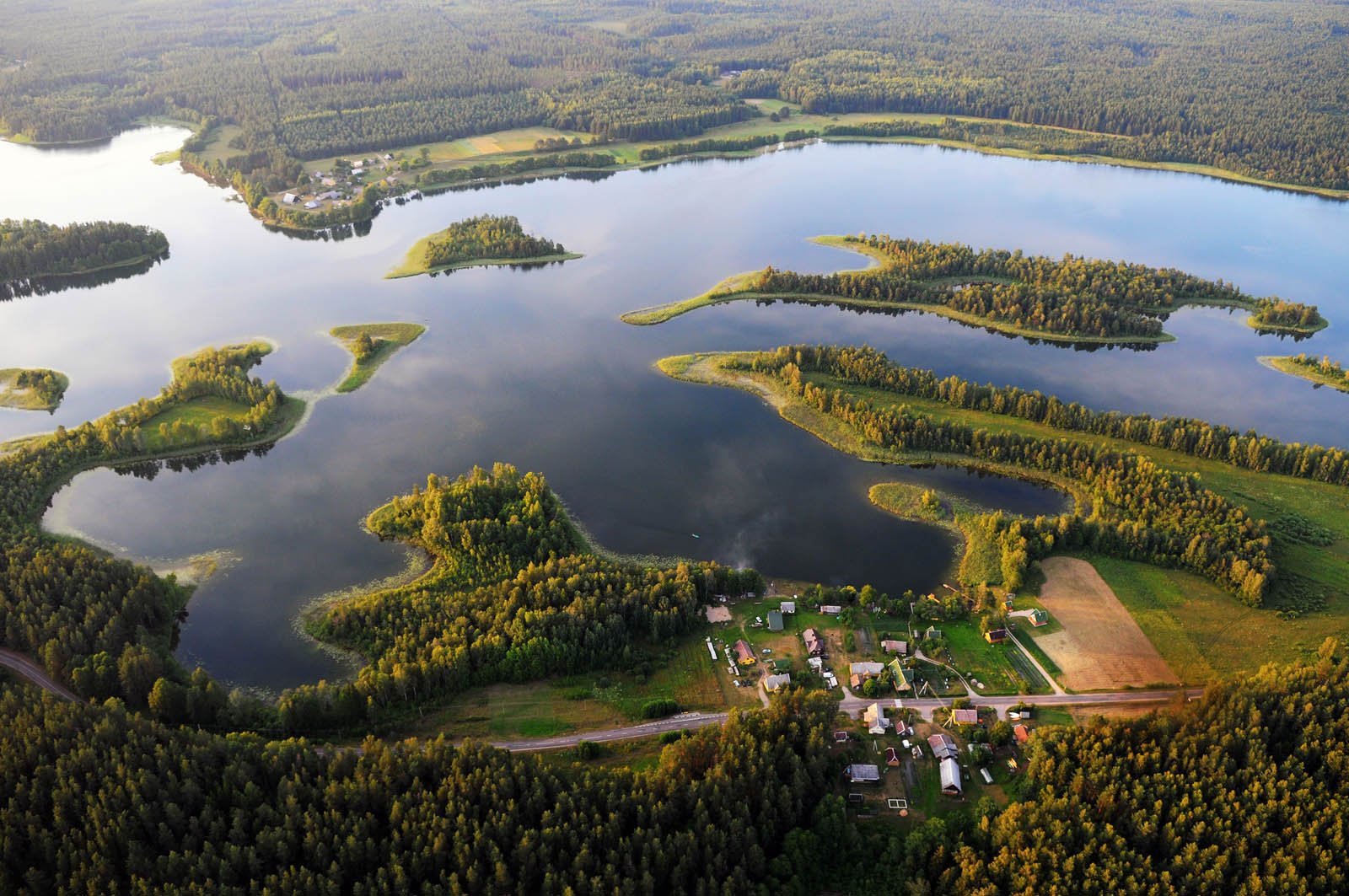
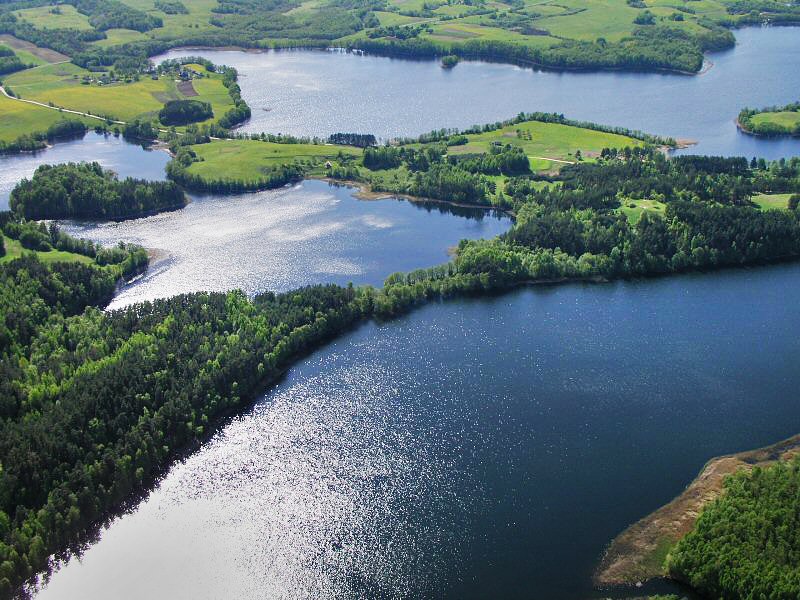
And so, you’ve finished your journey on the Būka River. Its conclusion is adorned by the island-rich Lake Baluošas (Fig. 6), into which you are now entering. The silence of Lake Baluošas is maintained by century-old pine forests, whose resinous scents you probably already smell. Upon entering Baluošas, keep to the right side and you’ll find the Adomragis rest area. You’ll recognize the rest area by the horn-shaped promontory, which you should not pass. Here you can refresh yourself, as you’ll need to cover a significant loop paddling through the islands of Lake Baluošas!
At the Adomragis rest area, especially at the tip of the promontory, there’s a clear and convenient shore inviting you to swim. It’s a great spot for a swim, but not for leaving trash: be kind to nature and don’t leave litter, as there are no trash bins here. You’ll dispose of it in a container at the end of the route, and until then, keep the trash in your bag in the canoe.
So, after snacking and resting, it’s time to decide which direction to paddle. It depends on your strength and remaining supplies.
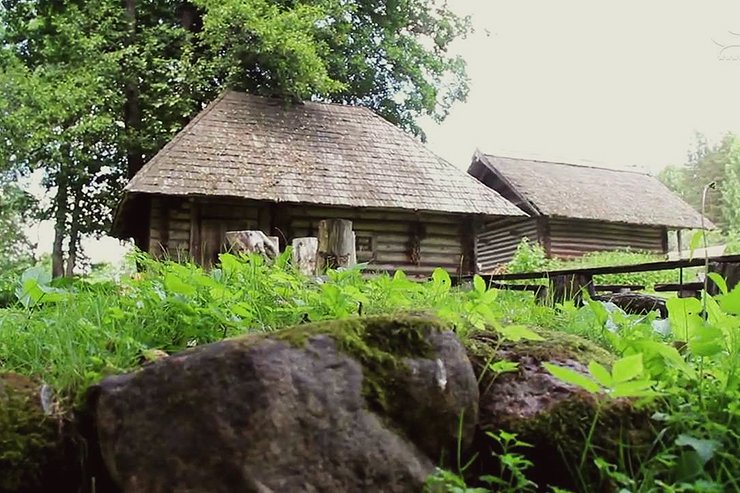
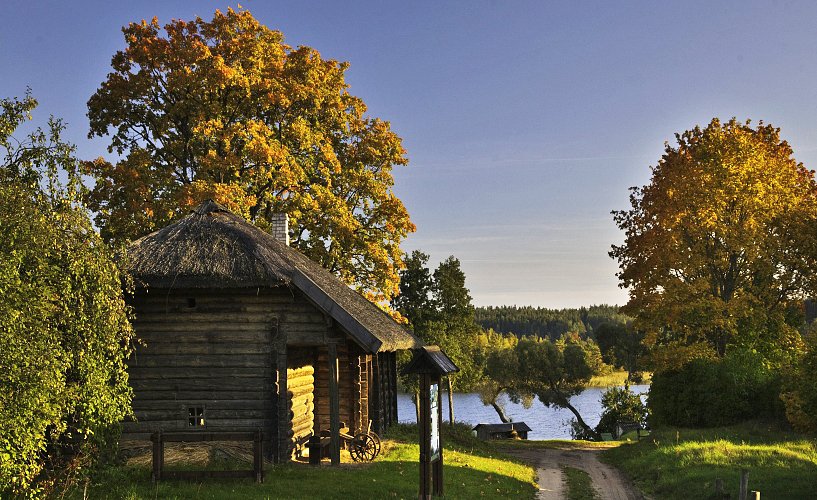
So, to visit the most beautiful spots of Lake Baluošas (if you chose the second option), paddle from the Adomragis rest area keeping to the left bank of Baluošas. Soon you’ll see the ethnographic village of Šuminai (Fig. 7), first mentioned in historical sources in 1784 under the name Pabaluošė. In this village grows a pine about 300 years old. However, the pine is not as famous as the historical fact that here, in 1972, the famous Lithuanian film “Tadas Blinda” was filmed, and the “Tadas Blinda villa” (Fig. 8) standing here will be shown by every resident of Šuminai village.
Leaving the village of Šuminai, paddle past Degėsis Island (Fig. 7) towards the last and longest island of Lake Baluošas – Ilgasalė. This is a unique hydrographic formation of Lithuanian nature, as Ilgasalė is the only island in Lithuanian lakes with a small lake called “Baluošo Eye” (Fig. 9). Reaching the southeastern end of Ilgasalė, paddle into the bay, where, finding a stream, you’ll paddle through the gaps in the vegetation.
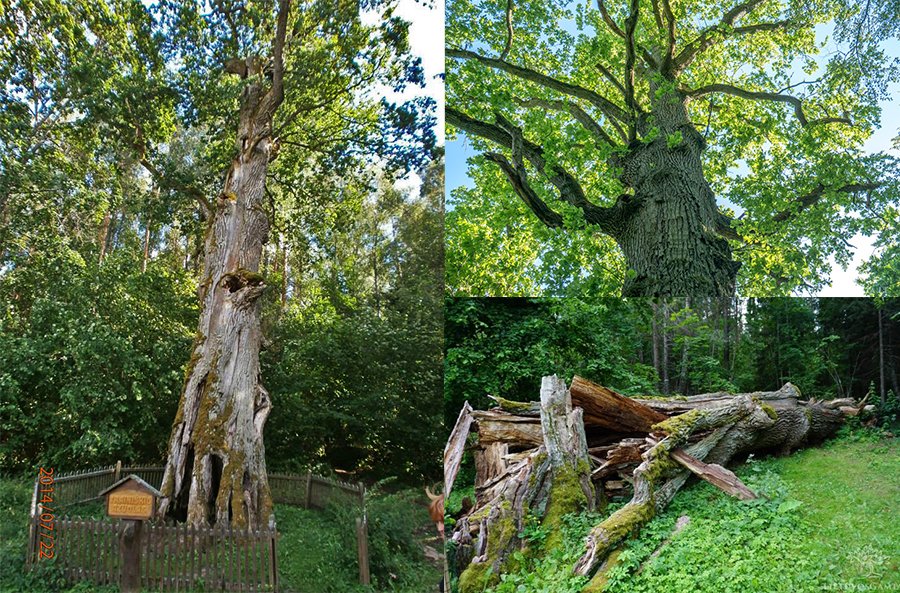
After paddling back from “Baluošo Eye”, return to the same place and the same direction you paddled from Šuminai village, then turning the canoes to the left, head southeast, following the shoreline of Baluošas. While paddling, you’ll see a promontory in the distance. After rounding the promontory, you’ll see the village of Trainiškis (Fig. 7). This is the finish of your journey – we suggest visiting the Trainiškis landmark – an 800-year-old oak (Fig. 10), which fell to the ground due to a strong storm in 2016. Since then, visitors can view not only the trunk of this historic tree but also its top!