River Žeimena (from Kaltanėnai km to Švenčionėliai)
10.00 – 20.00 €
- ~6.7 hours
- ~20 km
Inquire and book canoes
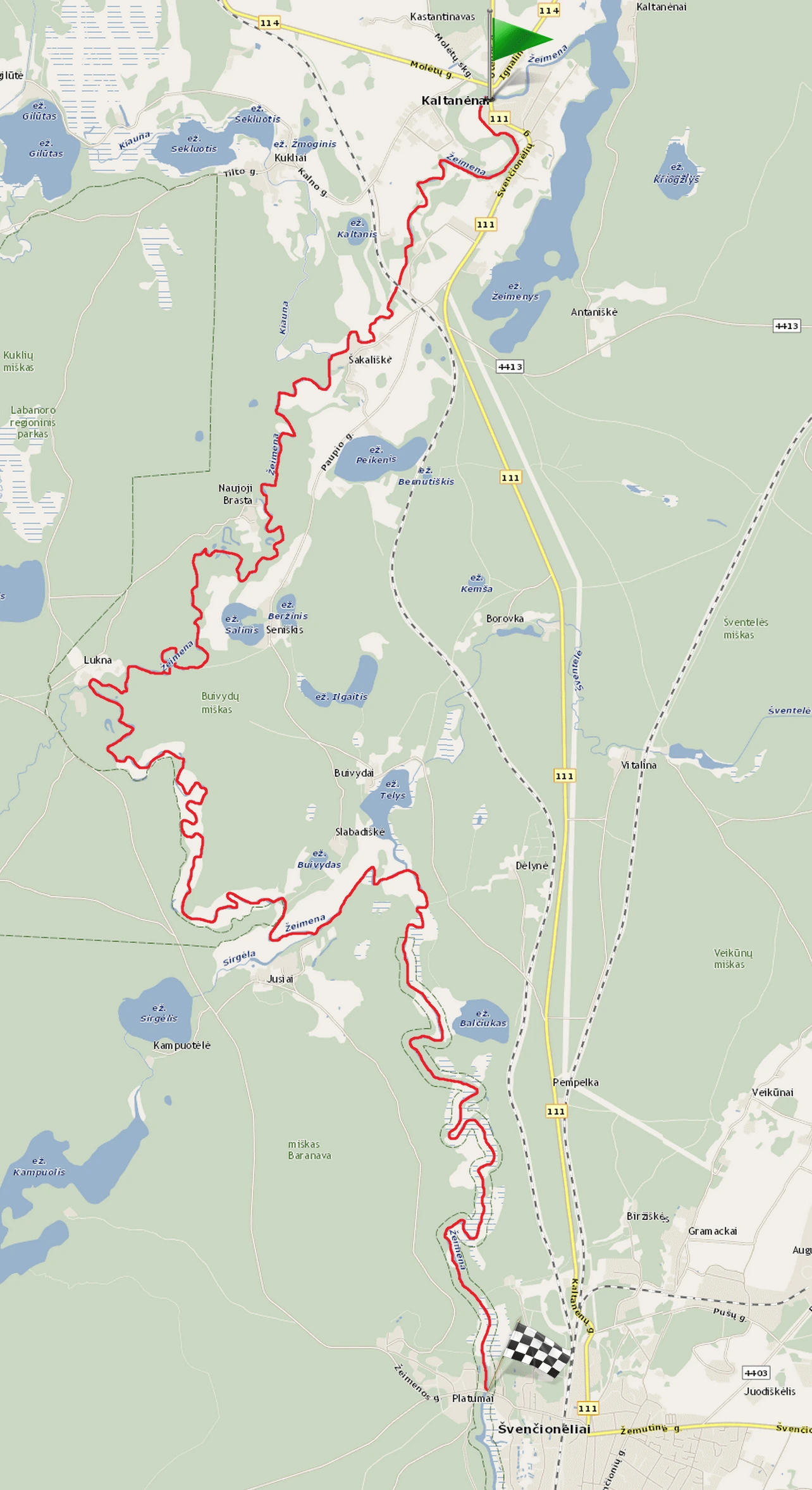
Žeimena trip segment ~20 km. You'll paddle for ~7 hours.
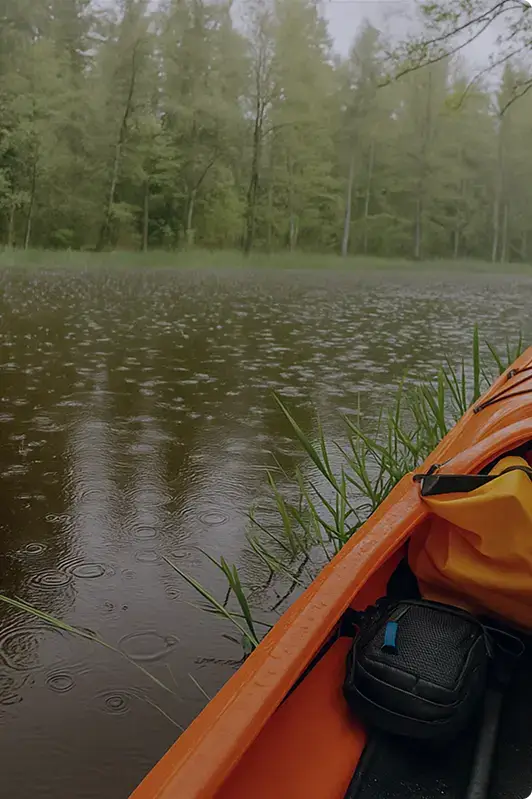
The Žeimena River will delight you with its abundance of bends, sandy bottom, and shores with convenient campsites for resting. As you paddle along the Žeimena River, you’ll see picturesque river valleys, pine trees hanging from steep cliffs, reflecting in the clear waters of Žeimena.
If you avoid river obstacles that add extremity – fallen trees, large stones – Žeimena will be a great choice for you, as the current is quite calm and watery. During this journey, you’ll feel relaxed, allowing you to take in and enjoy the freshness and beauty of nature. This trip won’t tire you out, and it’s convenient to travel with children.
Žeimena is the right tributary of the Neris River. It flows into the Neris 213 km from its mouth, at Santaka. The length of the Žeimena River from its source in Lake Žeimenys is about 82 km; the river basin is about 2800 km². It is rich in forests, many lakes, and swamps. Therefore, the Žeimena River is watery all year round. Its upper reaches consist of the cleanest waters in Lithuania, flowing from the network of rivers and lakes in the Aukštaitija National Park. The waters of the Labanoras Regional Park forests also flow into the Žeimena: Kiauna and Lakaja. Therefore, this Aukštaitija “mother of rivers” Žeimena is one of the cleanest in Lithuania.
Žeimena’s right tributaries – Kiauna, Luknelė, Sirgėla, Lakaja, Dubinga; left tributaries – Šventelė, Dobis, Saria, Mera, Skerdiksna.
The average slope of Žeimena is 46 cm/km, the width in the upper reaches is 15 – 20 m, the average depth is 0.5 – 1.5 m.
The journey begins! You’ll cover ~20 km.
The canoe trip will start in the town of Kaltanėnai, right after the bridge on the right bank of the Žeimena River. The river flows through meadows where the linden trees of the Kaltanėnai manor park stand. It’s convenient to drive to the departure point by car and prepare for a winding, pleasant journey.
If you have time before the start, look around: in the panorama of Kaltanėnai, you’ll see the neo-Gothic style single-tower Church of the Blessed Virgin Mary of the Angels, built of red clay bricks in 1909. The church was built over six years! If you have a few minutes, walk to the barns of Kaltanėnai manor. It’s a two-story folk classicism building constructed with wooden logs back in 1838.
Paddling downstream on Žeimena ~3 km from the start, on the left side, you’ll see the village of Šakališkės and the first right tributary of Žeimena – the Kiauna River.
After passing the tributary and rowing ~1.7 km, you’ll pass another small village – Naujoji Brasta. After ~3 km, you’ll find Lukna village, where the second right tributary of Žeimena – Luknelė flows. Although this river is short (~15 km), it’s very extreme: full of tree barriers, difficult to pass, so we don’t create routes on this river. After paddling ~5 km from the Luknelė tributary, on the right side of your paddling direction, you’ll see Jusiai village. Next to this village is the third right tributary of Žeimena – the Sirgėla River, with its mouth overgrown with reeds. This river is short, characterized by a weak current flowing from the Sirgelis lake.
At the mouth of the Sirgėla River, the territory of the Aukštaitija National Park ends, and the Žeimena ichthyological reserve begins. It extends to the confluence of the Žeimena and Neris rivers. The purpose of the ichthyological reserve is to protect spawning grounds for salmon, sea trout, and brown trout.
From the mouth of the Sirgėla River, paddle ~1 km and navigate two sharper bends of Žeimena, you’ll pass the left tributary of Žeimena – the short Šventelė River, which flows from Lake Telio.
After ~5 km, you’ll reach the banks of the town of Švenčionėliai.
Švenčionėliai were mentioned in written sources in the 17th century. at the end. In the northern part of the town, there was Juodiškis manor and a village around it during the Middle Ages. The town’s growth was spurred by the construction of the Saint Petersburg – Warsaw railway in 1862 and, of course, the railway station. A narrow-gauge railway from Panevėžys to Lentupis, reaching Adutiškis, was also built through the town. Unfortunately, the settlement, known for its railways, almost completely burned down in 1900. almost completely burned down. After quickly rebuilding it, industrial enterprises began to develop, and by 1907, a wooden church cross rose above the town’s roofs, and a school was established. The town’s expansion didn’t stop, so in 1920, Švenčionėliai received town rights. Four years later, a matchstick factory began operating. World War II caused significant damage to Švenčionėliai: over 200 buildings were destroyed, and in 1941, 8,000 people were shot in the forest across the Žeimena. However, Švenčionėliai is a constantly reborn town, so after the war, it was quickly rebuilt. You will soon see how it thrives now, as Švenčionėliai is your finish line! In the town, you can buy food, medicine, books, and enjoy your time in cafes.
Upon reaching Švenčionėliai, disembark before the first bridge, known locally as Kirulis Bridge. In front of it is a convenient sandy bathing area.